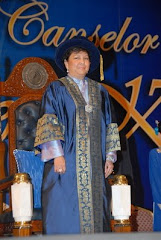
KUALA LUMPUR: April 26, 2008 By : Irdiani Mohd Salleh
The first-ever Malaysian to be awarded a fellowship by a prestigious British management research institute has no illusions about herself."I am like a humming bird (the world's smallest bird). Although it has tiny wings, it can fly wherever it wants," said Irene Ng, an associate professor of Marketing in the School of Business and Economics at the University of Exeter, in the UK.Ng was one of five academics in the UK who were recently awarded a Fellowship on Services by Britain's prestigious Advanced Institute of Management Research (AIM), which brings academics and business leaders together to develop research of a world-class standard.Furthermore, Ng was appointed the Lead Service Fellow, in which capacity she will join the directorate of AIM to ensure that the institute's activities are well-integrated."I'm really honoured to be selected. This is the dream of every academic in the UK. And to be appointed to lead the research is totally unexpected," said Ng.During her three-year fellowship, Ng's research will focus on the pricing and revenue management of services, value-based service innovation, service capacity and business-to-business (B2B) service contracts.Though Ng's achievement is no mean feat, the Malaysian academic, who is in her 40s, is humble about her accomplishments thus far."I'm not a genius. I'm just like any other person who went to a Sekolah Kebangsaan, failed my Form Two exams and had my research papers routinely rejected."But that never stopped me to keep on learning and trying," said Ng, who is also a mother of three."I don't limit myself. I just do what I want and say what I think. Maybe that's the secret of my success today."Indeed, Ng has had a spectacular career. Prior to joining academia, Ng was a successful business practitioner for 12 years. She was chief executive officer of SA Tours, the largest tour operator in Southeast Asia with offices in Malaysia, Singapore and China.She was also the founder and chief executive officer of Empress Cruise Lines, which boasts an annual turnover of US$250 million (RM795 million).But with her recent fellowship win, Ng may be demonstrating that her best accomplishments are yet to come.
Saturday, April 26, 2008

Wednesday, April 23, 2008
Publish names of errant grads - The Star
April 23, 2008
I REFER to “Grads prefer to stay on overseas” (Sunday Star, April 13) and the countless number of letters from readers that have been published over the past one week expressing their utter disappointment, disgust, dismay and astonishment with JPA and its current weak rules and regulations pertaining to scholars and borrowers sent overseas that has resulted in 230 scholars not returning home to serve the nation.
I am amazed and angry that in spite of all the letters which also outlined constructive suggestions on improving the current inadequacies, JPA has not offered any corrective measures to plug the holes and thus reassure the taxpayers and the general public that it will no longer treat taxpayers money callously and carelessly.
In the first place, it is supposed to have been proactive and should have anticipated these abuses. JPA perhaps has never heard that “preventive measures are far better than corrective actions. But what about corrective measures being better than no measure?
JPA is currently in the midst of selecting scholars for the 2008/09 term, and I hope it will be transparent by publishing in all major national newspapers the details of the successful applicants. If that is expensive, then make it available on its webpage.
May I also suggest that JPA publish in all major national newspapers or on its website the names of errant scholars and borrowers as well as the names of their guarantors and parents.
DISGUSTED TAXPAYER,Shah Alam, Selangor
I REFER to “Grads prefer to stay on overseas” (Sunday Star, April 13) and the countless number of letters from readers that have been published over the past one week expressing their utter disappointment, disgust, dismay and astonishment with JPA and its current weak rules and regulations pertaining to scholars and borrowers sent overseas that has resulted in 230 scholars not returning home to serve the nation.
I am amazed and angry that in spite of all the letters which also outlined constructive suggestions on improving the current inadequacies, JPA has not offered any corrective measures to plug the holes and thus reassure the taxpayers and the general public that it will no longer treat taxpayers money callously and carelessly.
In the first place, it is supposed to have been proactive and should have anticipated these abuses. JPA perhaps has never heard that “preventive measures are far better than corrective actions. But what about corrective measures being better than no measure?
JPA is currently in the midst of selecting scholars for the 2008/09 term, and I hope it will be transparent by publishing in all major national newspapers the details of the successful applicants. If that is expensive, then make it available on its webpage.
May I also suggest that JPA publish in all major national newspapers or on its website the names of errant scholars and borrowers as well as the names of their guarantors and parents.
DISGUSTED TAXPAYER,Shah Alam, Selangor
Tuesday, April 22, 2008
Graduates to form 33% of workforce by 2010 - The Star
April 22, 2008 By SIMRIT KAUR
KUALA LUMPUR: The Government intends to increase the number of tertiary-educated people in the workforce from 20% to 33% by 2010.
Higher Education Minister Datuk Seri Mohamed Khaled Nordin said that the challenge in achieving this was to ensure that there is no sacrifice in quality over quantity.
“To merely achieve these numbers would not be too difficult. We have grown our tertiary capacity from only one university in 1961 to 20 public universities, 36 private universities and university colleges, 21 polytechnics, 37 community colleges and 485 private colleges.”
Mohamed Khaled added that academic staff in universities would play a key role in producing quality graduates.
“Every university must create an environment that fosters a culture of excellence to attract the most able as well as motivate existing academic staff," he said in his speech Tuesday at the 12th Malaysian Education Summit, which was delivered by deputy higher education minister Dr Hou Kok Chung.
To build the right culture at universities, the ministry would uplift the profession, provide professional development and training opportunities and celebrate the achievements of academic staff with awards and recognition, he said.
Mohamed Khaled added that the Higher Education Ministry would move away from being a regulator and enforcer of government policies and act as a facilitator and lead partner instead.
“As the lead partner, the Ministry will not only provide strategic direction, but also offer the support necessary to ensure the success of higher education institutions,’’ he said.
“Our role at the Ministry is not to micro-manage the universities but to ensure that all the building blocks that are necessary to promote excellence are put in place and the environment is conducive for competitive academic pursuits.”
Mohamed Khaled also announced that institutions seeking to become apex universities would be submitting their transformation plans by the end of this month.
The ministry plans to select one or two Malaysian higher education institutions to become apex universities which would be put on an accelerated programme to achieve world-class status.
KUALA LUMPUR: The Government intends to increase the number of tertiary-educated people in the workforce from 20% to 33% by 2010.
Higher Education Minister Datuk Seri Mohamed Khaled Nordin said that the challenge in achieving this was to ensure that there is no sacrifice in quality over quantity.
“To merely achieve these numbers would not be too difficult. We have grown our tertiary capacity from only one university in 1961 to 20 public universities, 36 private universities and university colleges, 21 polytechnics, 37 community colleges and 485 private colleges.”
Mohamed Khaled added that academic staff in universities would play a key role in producing quality graduates.
“Every university must create an environment that fosters a culture of excellence to attract the most able as well as motivate existing academic staff," he said in his speech Tuesday at the 12th Malaysian Education Summit, which was delivered by deputy higher education minister Dr Hou Kok Chung.
To build the right culture at universities, the ministry would uplift the profession, provide professional development and training opportunities and celebrate the achievements of academic staff with awards and recognition, he said.
Mohamed Khaled added that the Higher Education Ministry would move away from being a regulator and enforcer of government policies and act as a facilitator and lead partner instead.
“As the lead partner, the Ministry will not only provide strategic direction, but also offer the support necessary to ensure the success of higher education institutions,’’ he said.
“Our role at the Ministry is not to micro-manage the universities but to ensure that all the building blocks that are necessary to promote excellence are put in place and the environment is conducive for competitive academic pursuits.”
Mohamed Khaled also announced that institutions seeking to become apex universities would be submitting their transformation plans by the end of this month.
The ministry plans to select one or two Malaysian higher education institutions to become apex universities which would be put on an accelerated programme to achieve world-class status.
Monday, April 21, 2008
World’s smallest transistor created by experts at University of Manchester - Bernama
LONDON, MON: April 21, 2008
Scientists have created the world’s smallest transistor, measuring a little bigger than a molecule, a feat which they claim could spark the development of super-fast computer chips in the future.
Using the world’s thinnest material called graphene, a team at University of Manchester has produced the transistor which is one atom thick and ten atoms wide, marking the first true electronic nano-component, the Press Trust of India (PTI) quoted the ’Science’ journal, as saying.
Four years ago, they discovered graphene, the first known one-atom-thick material which can be viewed as a plane of atoms pulled out from graphite.
Now, the researchers led by Prof Andre Geim and Kostya Novoselov have shown that it’s possible to carve out nanometre scale transistors from a single graphene crystal. Unlike other known materials, graphene remains highly stable and conductive even when it is cut into devices one nanometre wide.
The smaller the size of the transistors, the better they perform, the Indian news agency quoted the scientists as saying.
Transistors made of graphene start showing advantages at sizes below ten nanometres, the miniaturisation limit at which traditional silicon-based technology is predicted to actually fail.However, Prof Geim does not expect graphene-based circuits to come of age before 2025 but argues this technology will probably be the only way to shrink microelectronics after the silicon era comes to an end.
“It is too early to promise graphene supercomputers. (In fact) in our work, we relied on chance when making such small transistors. Unfortunately, no existing technology allows the cutting of materials with true nanometre precision.“
But this is exactly the same challenge that all post-silicon electronics has to face. At least, we now have a material that can meet such a challenge,” Prof Geim said.
“Now one can think of designer molecules acting as transistors connected into designer computer architecture on the basis of the same material (graphene), and use the same fabrication approch that is currently used by semiconductor industry,” added Novoselov.
Scientists have created the world’s smallest transistor, measuring a little bigger than a molecule, a feat which they claim could spark the development of super-fast computer chips in the future.
Using the world’s thinnest material called graphene, a team at University of Manchester has produced the transistor which is one atom thick and ten atoms wide, marking the first true electronic nano-component, the Press Trust of India (PTI) quoted the ’Science’ journal, as saying.
Four years ago, they discovered graphene, the first known one-atom-thick material which can be viewed as a plane of atoms pulled out from graphite.
Now, the researchers led by Prof Andre Geim and Kostya Novoselov have shown that it’s possible to carve out nanometre scale transistors from a single graphene crystal. Unlike other known materials, graphene remains highly stable and conductive even when it is cut into devices one nanometre wide.
The smaller the size of the transistors, the better they perform, the Indian news agency quoted the scientists as saying.
Transistors made of graphene start showing advantages at sizes below ten nanometres, the miniaturisation limit at which traditional silicon-based technology is predicted to actually fail.However, Prof Geim does not expect graphene-based circuits to come of age before 2025 but argues this technology will probably be the only way to shrink microelectronics after the silicon era comes to an end.
“It is too early to promise graphene supercomputers. (In fact) in our work, we relied on chance when making such small transistors. Unfortunately, no existing technology allows the cutting of materials with true nanometre precision.“
But this is exactly the same challenge that all post-silicon electronics has to face. At least, we now have a material that can meet such a challenge,” Prof Geim said.
“Now one can think of designer molecules acting as transistors connected into designer computer architecture on the basis of the same material (graphene), and use the same fabrication approch that is currently used by semiconductor industry,” added Novoselov.
MQA study to determine mandatory college accreditation - NST
PETALING JAYA, Mon: April 21, 2008 by Eileen Ng
The Malaysian Qualifications Agency (MQA) will conduct a study to ascertain the feasibility of having mandatory accreditation for all institutions of higher learning.
Higher Education Minister Datuk Seri Khaled Nordin said this was in line with the government aspiration to turn Malaysia into an education hub.“I have directed the MQA to study this matter. We expect to make a decision before the tabling of the Higher Education Bill by year’s end,” he said during a visit to the MQA office today. He was accompanied by his deputy Dr Hou Kok Chung.
At present, only 39 per cent of more than 1,000 courses offered by universities and colleges were accredited, meaning they are recognised by the government.MQA-accredited courses are deemed to have fulfilled its standards. Among the advantages of having accredited courses are that students would be able to apply for the National Higher Education Fund Corporation (PTPTN) loans and those who passed could apply for jobs in the civil service.
Khaled said mandatory accreditation would solve the problem of students unknowingly taking courses that were not recognised. However, he noted that some employers were hiring graduates regardless of whether their courses were recognised or not.
“This is why we needed to study the matter thoroughly,” he said. He said the MQA would be conducting an academic performance audit to evaluate the standing and academic competency of local educational institutions in June.Fifty-seven public and private institutions with university college and university status will be involved in the six-month exercise.
Preliminary work such as the preparation of documents and training for auditors has started.The MQA has also been urged to establish ties with international bodies.“This will benefit the country especially in terms of cross border education, academic mobility and gaining regional mutual recognition,” he said.
On the rating system for higher education aimed at increasing the competitiveness of local universities, Khaled said this would be announced in two weeks
The Malaysian Qualifications Agency (MQA) will conduct a study to ascertain the feasibility of having mandatory accreditation for all institutions of higher learning.
Higher Education Minister Datuk Seri Khaled Nordin said this was in line with the government aspiration to turn Malaysia into an education hub.“I have directed the MQA to study this matter. We expect to make a decision before the tabling of the Higher Education Bill by year’s end,” he said during a visit to the MQA office today. He was accompanied by his deputy Dr Hou Kok Chung.
At present, only 39 per cent of more than 1,000 courses offered by universities and colleges were accredited, meaning they are recognised by the government.MQA-accredited courses are deemed to have fulfilled its standards. Among the advantages of having accredited courses are that students would be able to apply for the National Higher Education Fund Corporation (PTPTN) loans and those who passed could apply for jobs in the civil service.
Khaled said mandatory accreditation would solve the problem of students unknowingly taking courses that were not recognised. However, he noted that some employers were hiring graduates regardless of whether their courses were recognised or not.
“This is why we needed to study the matter thoroughly,” he said. He said the MQA would be conducting an academic performance audit to evaluate the standing and academic competency of local educational institutions in June.Fifty-seven public and private institutions with university college and university status will be involved in the six-month exercise.
Preliminary work such as the preparation of documents and training for auditors has started.The MQA has also been urged to establish ties with international bodies.“This will benefit the country especially in terms of cross border education, academic mobility and gaining regional mutual recognition,” he said.
On the rating system for higher education aimed at increasing the competitiveness of local universities, Khaled said this would be announced in two weeks
Sunday, April 20, 2008
Education institutions must be accountable - The Star
April 20, 2008
Higher education institutions must be accountable to the public and to their stakeholders.
Deputy Higher Education Minister Datuk Idris Haron said governance went beyond the management of institutions.
“It is a complex system of interactions among structures, traditions, functions and processes characterised by the three key values of accountability, transparency and participation,” he told reporters after opening an executive education programme on governance and university boards in Petaling Jaya, Selangor, recently.
The nature and quality of these interactions, the deputy minister added, lead to sustainable human development, how power is exercised, how decisions are made, how stakeholders have their say and how decision- makers are held accountable.
“Accountability cannot be enforced without transparency and the rule of law,” Idris said.
In the context of higher education institutions, he said the focus was on the connections and interactions between and among university governing personnel, in order to advance professional development.
Idris said it was not an easy task to empower higher education institutions.
“It cannot be done overnight. Our efforts can only be achieved through hard work, patience and strong will.”
On the programme, he said it was the third in a series or-ganised by the Higher Education Leadership Academy of Malaysia (Akept).
“It is a positive and encouraging step forward in the advancement of higher education,” added the deputy minister.
Higher education institutions must be accountable to the public and to their stakeholders.
Deputy Higher Education Minister Datuk Idris Haron said governance went beyond the management of institutions.
“It is a complex system of interactions among structures, traditions, functions and processes characterised by the three key values of accountability, transparency and participation,” he told reporters after opening an executive education programme on governance and university boards in Petaling Jaya, Selangor, recently.
The nature and quality of these interactions, the deputy minister added, lead to sustainable human development, how power is exercised, how decisions are made, how stakeholders have their say and how decision- makers are held accountable.
“Accountability cannot be enforced without transparency and the rule of law,” Idris said.
In the context of higher education institutions, he said the focus was on the connections and interactions between and among university governing personnel, in order to advance professional development.
Idris said it was not an easy task to empower higher education institutions.
“It cannot be done overnight. Our efforts can only be achieved through hard work, patience and strong will.”
On the programme, he said it was the third in a series or-ganised by the Higher Education Leadership Academy of Malaysia (Akept).
“It is a positive and encouraging step forward in the advancement of higher education,” added the deputy minister.
Lower broadband fees, urges tech association - The Star
PENANG: April 20, 2008 By LOOI SUE-CHERN
The Association of Computers and Multimedia Industry of Malaysia (Pikom) has proposed that monthly Internet broadband fees for home users be lowered to RM10 for 50 hours of usage.
Its chairman David Wong said the move would help boost the nation's broadband rate to reach 50% of Malaysian households, adding that the most subscribed broadband packages now cost from about RM50 to RM60 a month for unlimited usage.
"We have 1.37 million people in the country using broadband. This amounts to only 15.5% of total households in Malaysia.
"This figure is still low compared to the broadband penetration rate in other countries,” he said at the opening of the Pikom PC Fair at the Penang International Sports Arena here on Friday by Chief Minister Lim Guan Eng.
He said Pikom’s proposal would be submitted to the International Trade and Industry Ministry on Monday.
Wong said a RM10 fee would make broadband Internet access very affordable to all Malaysians.
Lim said the state government supported Pikom's proposal to fix the broadband rate at RM10.
"The move will promote broadband usage and at the same time make people more ICT-savvy,” he told reporters after the opening ceremony.
In his speech earlier, Lim had said the state government was keen to work with Pikom to boost the state’s ICT industry, with the association playing a matchmaking role to pair local ICT businesses with foreign interests or invite Penang-based ICT businesses in trade missions targeting potential markets.
Earlier, Wong announced that Pikom would set up five state chapters to drive the association’s efforts in the northern, southern and east coast regions as well as Sabah and Sarawak.
“The chapters will be chaired by our representatives who will act as our liaisons with state governments.
“Our representative for Sabah has been appointed. We expect to appoint those for the other four states by August ,” he said.
The Association of Computers and Multimedia Industry of Malaysia (Pikom) has proposed that monthly Internet broadband fees for home users be lowered to RM10 for 50 hours of usage.
Its chairman David Wong said the move would help boost the nation's broadband rate to reach 50% of Malaysian households, adding that the most subscribed broadband packages now cost from about RM50 to RM60 a month for unlimited usage.
"We have 1.37 million people in the country using broadband. This amounts to only 15.5% of total households in Malaysia.
"This figure is still low compared to the broadband penetration rate in other countries,” he said at the opening of the Pikom PC Fair at the Penang International Sports Arena here on Friday by Chief Minister Lim Guan Eng.
He said Pikom’s proposal would be submitted to the International Trade and Industry Ministry on Monday.
Wong said a RM10 fee would make broadband Internet access very affordable to all Malaysians.
Lim said the state government supported Pikom's proposal to fix the broadband rate at RM10.
"The move will promote broadband usage and at the same time make people more ICT-savvy,” he told reporters after the opening ceremony.
In his speech earlier, Lim had said the state government was keen to work with Pikom to boost the state’s ICT industry, with the association playing a matchmaking role to pair local ICT businesses with foreign interests or invite Penang-based ICT businesses in trade missions targeting potential markets.
Earlier, Wong announced that Pikom would set up five state chapters to drive the association’s efforts in the northern, southern and east coast regions as well as Sabah and Sarawak.
“The chapters will be chaired by our representatives who will act as our liaisons with state governments.
“Our representative for Sabah has been appointed. We expect to appoint those for the other four states by August ,” he said.
Subscribe to:
Comments (Atom)