Showing posts with label Supervisor. Show all posts

Sunday, December 26, 2010

Prof. Karl Wagner visits Toong Wah Cave Temple in Ipoh


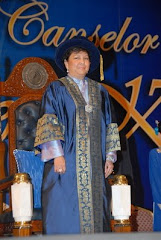
During his visit to Malaysia again in December, my PhD supervisor Prof. Karl Wagner took the opportunity to come to Ipoh and spent a night here. It was to celebrate my success in obtaining my PhD degree recently during the 9th OUM Convocation, which he was unable to attend due to work commitment.


We had good Bean Sprout Chicken and Yong Tau Fu. This has been one of the main attractions for him to come to Ipoh. Before he left, he visited the Toong Wah Cave Temple which was located near the Lost World of Tambun. This was his second visit to this temple as it was located 100 m above.


During his visit, w have good discussion on the joint research that we plan to do. We are also planning to write a book to share our discovery.

Tuesday, August 17, 2010

Overcoming Problems in Studying for a PhD

How to Overcome Difficulties With a Doctorate or Graduate School

Aug 12, 2009 By Alistair McCulloch

When students begin to study for a PhD or enters a new graduate school, they begin a highly significant period in their life. A PhD, or doctorate, involves making a contribution to knowledge and can also result in significant changes in the way the student thinks about the world.

However, because a PhD involves this sort of transformational experience, and also because it takes a minimum of three years and sometimes more than ten, real problems can emerge during the period of study. Here are the main problems with studying for a PhD.

Problems With Identifying a Good Research Topic

A good research topic is vital to a good PhD. It must be rooted in the academic literature, as this is one of the functions of the literature review, to identify an issue that no-one else has approached in the way the student intends.

Loss of Motivation

The best way to avoid loss of motivation is for students to really know why they want to do a PhD and to select a topic, institution and supervisor that they know will excite them for the long run. Understanding motivation will also help the institution (through the supervisor) support and encourage the student in the best way.

Experiments That Don’t Work

All scientists know the frustration that can arise when an experiment doesn’t work. If this happens to a research student, he should seek help from his fellow students, from the supervisor, from other researchers in the department and also from scientists working at other Universities and research laboratories.

Problems With Data-Collection


Sometimes social science research students face problems collecting their data. This can be due to difficulties in recruiting respondents. Sometimes their responses will not allow students to address their research questions in the way they had expected. If numbers of respondents are insufficient, the selection criteria may be extended or the number of case studies increased. If the responses are not what was expected, there may be an opportunity to revise the theory or model being tested and this may result in a better thesis.

Isolation


The further a student gets into his PhD, the more likely he is to experience isolation, a consequence of studying something completely original. Joining student societies and trying to maintain a life outside university are two ways of combating this. If there’s no doctoral student society in place, a student could try to organise one.

Running out of Money

PhD students on grants often find it very difficult to complete their studies once their grant has run out, and part-time students are likely to find it hard to make ends meet throughout their studies. It is possible to suspend a doctoral registration, but it is not uncommon that students who do this find it hard to re-start. If it is essential that a suspension be put in place, students should keep in touch with both their research project and their supervisor during the period of suspension. Maintaining links improves the chances of eventual completion considerably.

Problems With a Supervisor

Problems with a research degree supervisor can arise from overwork, personality clashes, a change of topic or a multitude of reasons. Whatever the reason, it is important that the student discuss the situation openly with the supervisor. If that is impossible, go to the Departmental Research Degree Coordinator or the Graduate School. If none of these are possible, talk with the student union or student association. It is a student’s right to have good supervision and a university’s failure to provide it leaves it liable.

What if Someone Publishes a Student’s Original Idea Before He Does?

A student shouldn’t worry about this because it very rarely happens. If it does, and it is worth reiterating that the chance of someone reproducing independently a student’s programme of work is very, very slim. In that case, re-orientate the thesis so that it focuses on a different aspect of the research. Think about drawing on a different aspect of the literature review or do some additional empirical work to move the idea on. The latter option may not be a satisfactory situation, but it may well save the doctorate the student has put so much work into.

Read more at Suite101: Overcoming Problems in Studying for a PhD: How to Overcome Difficulties With a Doctorate or Graduate School http://graduate-schools.suite101.com/article.cfm/overcoming_problems_in_studying_for_a_phd#ixzz0wpSpZoQ1

The PhD journey: how to choose a good supervisor

Shared interests are the building blocks of your relationship

"Choosing a supervisor is tricky because you don't know much about them until you start working with them," says Lewis Wolpert, professor of biology at University College London. "Instead, start by choosing a problem that interests you - it's easier to do and just as important."

"It might sound obvious," says Jim Hough, director of the Institute for Gravitational Research at the University of Glasgow, "but it's amazing how many students don't do that."

John Cowpe, a second-year PhD student from the University of Salford, agrees. "To get the most from your supervisor, you have to be interested in what they do. My supervisor will leap at any chance to discuss - often at great length - a topic he's passionate about. You learn just as much from anecdotal chatting as you do from your own research."

A good supervisor says all the right things

Your supervisor will be a mentor, friend, confidante, adviser and also a voice of reason, so make sure it's a voice you'll want to hear. "Over the course of three years, it's crucial to have someone who can encourage you when your experiments fall flat, challenge you when you become cocky and help steer you towards successfully submitting your thesis," says broadcaster and writer Simon Singh, who did a PhD in particle physics at the University of Cambridge.

Choose a supervisor who excites you

It is essential to find a supervisor you believe in and whose work you find exciting, says Susan Greenfield, professor of physiology at the University of Oxford. "Scientists are made up of all types of people - thinkers, dreamers, practical workers - all of whom are important, but you need to find someone who thinks in the same way that you do."

You'll see many of your peers going to the City and into industry, earning much higher salaries than you, and who also seem to have more time off, says Greenfield, "so it's vital that you have a real passion and belief in your work".

Supervisors can be stereotyped - pick your favourite

So says David Hand, professor of mathematics at Imperial College London. "At one extreme, there are the most eminent senior academics with considerable experience. Their reputation and influence can rub off and they can introduce you to other big names, but they may not be able to give you as much of their time as is desirable."

At the other extreme is the junior academic, says Hand. While they have less experience, they have more time to spend on your project. This is an important factor to consider, says Vivienne Raper, a recent PhD graduate from the University of Bristol. "If you're not at your most motivated, an absent or distant PhD supervisor can be a recipe for months of procrastination."

Another option is to choose a supervisor close to retirement, suggests second-year PhD student Stefan Rohrmoser from the University of Southampton. "They are more likely to have a relaxed attitude, as they've seen it all before. Their students won't be running blindfolded into an overly ambitious project. They will be given interesting work which their supervisor knows is going to provide enough results to comfortably finish a PhD."

Personal chemistry is important

Once you've found a supervisor you'd like to work with, go and meet them, says Greenfield. "The real issue is to see whether the chemistry is right," she says. "Think about whether your prospective supervisor seems like the sort of person who will be there when you need them."

While you're visiting potential supervisors, try to meet some of their current students as well as other colleagues in their group. "I always tell PhD candidates to talk to my students," says Carolyn Stephens, senior lecturer in international environmental health at the London School of Hygiene and Tropical Medicine. "They know things about me that I don't know myself."

You can get a real feel for the mood of a department by chatting to current PhD students, agrees Singh. "Buy them a coffee and a doughnut, and ask them if they enjoy being part of the research group."

See a variety of people

If you have the opportunity to sample different supervisors at the beginning of your PhD, definitely take it, says Gerd Gigerenzer, director of the Max Planck Institute for Human Development in Berlin. "That gives you more time to work out who you would work best with."

Research councils are also starting to move towards multidisciplinary projects, which means you might get to work with more than one team, says Stephens. "There's a lot of encouragement to cross boundaries between disciplines. If this is the case, make sure your supervisor is willing to put you in touch with scientists from other subjects."

You will also find help from those closer to home. "Remember that on a day-to-day basis you will spend more time working with students and postdocs than your supervisor," says Hough. "So it's important that there's a good social environment. Usually that means a reasonable-sized group." This was important for Singh: "Being surrounded by postdocs, lecturers and other postgraduates willing to advise and guide me was invaluable."

Keep channels of communication free from static

If you feel like your supervisor is talking in a foreign language, don't panic. "Often in one-to-one meetings, you will understand what your supervisor says at a basic level, but will only have a good grasp of the implications and ramifications towards the end of your PhD," says Hand. "Don't be afraid to ask questions if you don't understand," agrees Gigerenzer. "Openness is key."

Prepare to take the reins


"A PhD is part apprenticeship and part equal partner. Ideally, the balance between these two modes shifts to the latter as time goes on," says John Krebs, professor of zoology at the University of Oxford. "It's a bit like learning to ride a bike," says Greenfield. "You start off on the back of your mother's bike. Then you get your own tricycle, then a two-wheeled bike with stabilisers. Finally your stabilisers are removed."

Science shouldn't be too safe; you shouldn't be too protected, she says. "Being trained to cope with failure is one of the most important parts of your PhD. If you don't know failure, then you're not being stretched enough." That said, you will reach the point where you know more than your supervisor about a specific aspects of your research. "This should certainly be your goal," says Gigerenzer.

Source: http://www.newscientist.com/article/mg19726442.500-the-phd-journey-how-to-choose-a-good-supervisor.html

Friday, August 13, 2010

Happy days: Why PhD students need a helping hand from their supervisors - The Independent

February 14, 2008
By Suzanne Lynch


For most students, having a supportive supervisor is crucial to their chances of successfully completing a PhD. But tales of woe remain commonplace - despite reforms.

Laura began a PhD in Chinese cultural studies in 2003, but within months realized that something was wrong. "After six months, I became worried. I had only met my supervisor once, and I seemed to have no plan or sense of direction," she says. "Although my department had seemed delighted to accept me as a PhD student - even awarding me a studentship - it soon became clear that my supervisors knew nothing about my subject. I began to realize that the only reason my department had taken me on was to broaden their research profile."

Things deteriorated rapidly. Her supervisor showed no interest in her work, and communication broke down completely. Despite repeated complaints to her department, nothing was done to resolve the situation.

Eventually, four years into her PhD, Laura finally found two supervisors from another department within her university who were prepared to take her on. Although her PhD is finally on track, she is bitter about her experience. "It makes me so angry," she says. "Supervisors are in such a position of power that students are afraid to stand up to them. It's as if they're untouchable, above the law."

Laura's experience is not unique. Tales of PhD woe are ten-a-penny among graduate students - and the vast majority of these involve problems with supervisors. Last year, more than a third of complaints received by the Office of the Independent Adjudicator, the body that handles individual complaints against Higher Education Institutions, were from postgraduate students.

One of the main problems is that for many PhD students, the supervisor-supervisee relationship is pivotal to the successful completion of their PhD.

This was confirmed by last year's Postgraduate Research Experience Survey (PRES), the first national survey of postgraduate students. It found that the vast majority of postgraduates - more than 95 per cent - rated supervision as the single most important factor affecting their research experience and their ability to finish their PhDs on time.

As Derek S. Pugh of the Open University, co-author of How to Get a PhD, says, supervision can make or break a PhD. "Mostly the system works well and poor supervision is the exception rather than the norm," he says. "But when it does break down, it can go disastrously wrong and have serious consequences."

David, a former PhD student, knows just how detrimental a poor supervisor can be. He began a PhD in 2006 but quit after a year. "I knew straightaway that there was a problem with my supervisor," he says. "I thought it was odd that I had no contact with him before starting the PhD, and when I arrived my suspicions were confirmed. He was never around, and there were never any opportunities for regular supervisions. Even though I was working on a prestigious project, it was just myself and an inexperienced postdoc in the lab and I had no direction or support."

Things came to a head during David's first year review, when his supervisor told him that he wasn't cut out for a PhD and accused him of faking results. Although David complained to his head of department who did take his side, he decided eventually to drop out.

"Because of funding, I was tied to the project, so I couldn't change my supervisor," he says. "My biggest gripe with him was that he was accepted me on to this programme knowing I had no background in the specific field and yet offered so little support."

It's not all bad news though. Despite stories such as David and Laura's, things are changing in the field of postgraduate supervision.

"There have been real changes in the past decade or so," says Professor Chris Park, director of the Graduate School at Lancaster University.

"While traditionally in the UK, the 'secret garden' model - whereby supervisor and supervisee worked together, out of sight - was the norm, now the system is becoming more transparent and accountable."

One reason why universities may have become more accountable is that in the late 1990s a series of court cases were taken by PhD students against their institutions. Kevin Wilkinson took legal proceedings against Aston University for not providing him with a supervisor when he arrived to do a PhD in 1997. Similarly, one-time PhD student Neil McDougal brought a case against the University of Bath over poor postgraduate supervision. Cases like these have meant that universities have had to pull up their socks and become more responsive to their research students.

One of the main changes that has taken place in recent years has been reform of the supervisory structure itself. Nowadays, most students signing up for a PhD will be assigned at least two supervisors, typically a main supervisor and co-supervisor. Supervisory teams are also common.

Although some believe that this system generates its own problems, it does ensure that PhD students have access to a broader range of supervisory advice and support and have a fall-back plan if their relationship with their principal supervisor goes wrong.

Huge steps have also been taken in supervisor training. For years, PhD supervisors were expected to get on with the job with little training or support in how to manage or direct PhD students. Now most universities require their staff to do courses in research student supervision.

University College London (UCL) is one institution that has embraced changes in their policy of research student supervision. PhD students at UCL are assigned a primary and secondary supervisor, and all students are required to keep an electronic log-book which has to be validated by their supervisor.

The university has also capped the number of students PhD supervisors are permitted to supervise, with academics being limited to six full-time doctorate students. According to Professor Michael Worton, vice-provost of UCL, these changes are hugely important - and not just for the PhD students.

"Our main focus is to ensure that our PhD students have the best possible research experience, but having a clear and transparent system in place also has enormous benefits for the supervisors," he says.

"The relationship between supervisor and PhD student can potentially be one of the most rewarding academic partnerships. Working with PhD students helps keep academics invigorated and in touch with new developments in their research field. PhDs are our colleagues of the future."

Corrinne Burns is a PhD student who has an excellent relationship with her supervisor. She is in the second year of a PhD researching anti-malarial drugs in plants at De Montfort University.

She starts each day with a cup of tea with her supervisor and at the end of each month has an official meeting with him.

"My supervisor is always very approachable and supportive and treats me like a colleague," she says. "Having such regular contact also helps to keep the project on track and makes all the difference."

But what are the options for students whose supervisor experience is not so positive? "If you are having problems with your supervisor, try to deal with the problem locally," says Chris Park. "First, approach the head of department. If that doesn't yield results, the next port of call should be someone at an institutional level such as the dean of graduate studies. Failing that, you can move outside your institution and make an official complaint to the Office of the Independent Adjudicator."

The main thing, Park stresses, is that anxious PhD students should not suffer in silence and should look for help.

"There are plenty of mechanisms now in place to help them. It's up to students themselves to take the initiative and make sure they take advantage of the support that's available."

How to manage your supervisor

Go to your tutorial with a list of topics for discussion

Help your supervisor give you better feedback on your work by always asking supplementary questions to make sure that you understand fully what you have to do.

Ensure that every time you leave a tutorial you have agreed and noted a date for the next one. Be punctilious in meeting appointments and deadlines so that your supervisor will be too.

Criticism is part and parcel of the PhD experience, but it should be constructive.

Ensure that you are clear about what is being criticised and how to put it right. If in doubt, ask your supervisor to clarify. Never leave a tutorial without fully understanding what is expected of you.

Avoid inappropriate personal relationships with your supervisor.

Be enthusiastic! Remind them of why your work is important. Your enthusiasm for your subject will rub off!

Keep a log and a written summary of your tutorial and send it to your supervisor - it will help to keep both parties on track.

From 'How to Get a PhD', co-authored by Derek S. Pugh

Source: http://license.icopyright.net/user/viewFreeUse.act?fuid=OTUyMzk3OA%3D%3D